Capabilities
We describe our capabilities by system layer, because problems on site rarely come from a single PLC, screen or report. When the control system, SCADA, historian, OT network, reporting and commissioning records are not designed together, the system may run — but it becomes hard to manage.
Below, for each layer: what we sort out, what we typically deliver, and where our scope ends.
To see how these layers map to our services: Services
System layers we work across
DCS environments
SCADA / HMI / Historian
Industrial Reporting & KPI
OT network / secure remote access
Commissioning / FAT / SAT
Industries & use cases
Food & beverage
What we do in this sector →
Chemical & paint
What we do in this sector →
Mining & heavy process
What we do in this sector →
Cement
What we do in this sector →
Energy & distribution SCADA
Project-based support
Glass production
What we do in this sector →
Water & wastewater
What we do in this sector →
HVAC, boiler & chilled water
What we do in this sector →
Utilities
What we do in this sector →
Packaging & material handling
What we do in this sector →
Machine & line automation
What we do in this sector →
Process skids & package systems
What we do in this sector →
Field execution reference
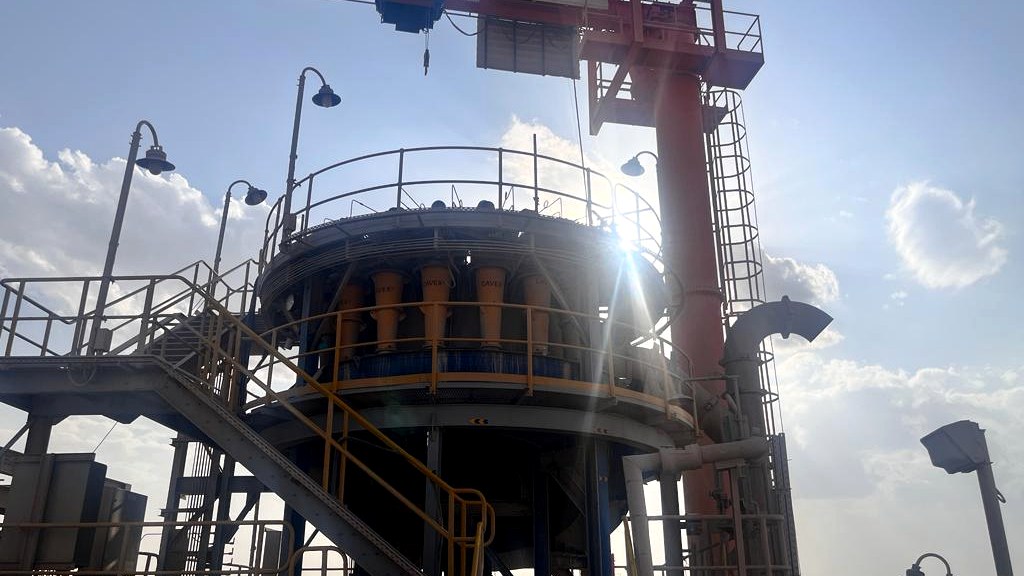
Site photo of process equipment. Site details are not shared.
We work within the constraints of the existing PLC, SCADA, historian and plant network. The target is always the same: reliable data, disciplined commissioning and an architecture that is still maintainable years later.
Customer, site and project details are kept confidential; examples are described by technical scope.
System layers we work across
DCS environments
What we sort out
In DCS environments, the critical job is keeping control logic, field interfaces, alarm/trend structure, reporting and commissioning records in line with each other. We work on interface mapping, modernization of existing systems, stabilization, historian connectivity and commissioning preparation.
Typical outputs: interface responsibilities and delivery limits · PLC/DCS interface map · I/O, signal and control-logic derivation from P&ID and equipment lists · interlock, alarm, trend and operation scenarios · operator-screen hierarchy contribution · batch/recipe and reporting data flow · FAT/SAT scenarios, test records and acceptance support · as-built project file, test records and handover documentation
DCS / PLC / SCADA Engineering →Scope note
Process control scope is set by the process owner, OEM or main contractor and the contract. We take the engineering role on the control, SCADA, historian, reporting and commissioning side.
SCADA / HMI / Historian
What we sort out
In most plants SCADA screens grow over time, but alarm priorities, tag naming, trend views and the historian data path are not tidied up at the same pace. We restructure these so production signals turn into visibility operators and maintenance can actually rely on.
Typical outputs: SCADA/historian data flow and system architecture · SCADA/historian data-point architecture and naming standard · operator-screen hierarchy, alarm/trend visibility and reporting templates · historian/SQL record structure · user, role and access model · commissioning tests and acceptance records · data validation between source signal, historian/SQL record and report output
SCADA, HMI & Historian Systems →Scope note
Part of this experience — energy, distribution and water SCADA, WebSCADA and custom reporting tools — comes from the founding team’s work before Analog Control.
Industrial Reporting & KPI
What we sort out
Reporting only means something when the signal from the field has a reliable recording and calculation path. We build energy, CIP, batch, recipe, downtime, OEE, production, utility and quality reports on top of your existing PLC, SCADA, historian and SQL infrastructure.
Typical outputs: data source map · PLC / SCADA / historian / SQL data flow · historian/SQL data model · reporting templates · operator input flow · KPI calculation logic · data validation between source signal, historian/SQL record and report output · acceptance tests and report validation records
Industrial Reporting & KPI Systems →Scope note
The KPI set and calculation logic are agreed per project. A separate reporting platform is only suggested when the existing infrastructure genuinely cannot carry it.
OT network / secure remote access
What we sort out
The OT network is the invisible layer that carries the production system. If switches, firewalls, engineering stations, operator stations and the remote access model are unclear, maintenance and intervention get riskier. We work on segmentation, vendor and engineering access, DMZ models and firewall boundaries with production continuity in mind.
Typical outputs: OT network topology · zone/conduit concept · remote access flow · access boundary diagram · device and service inventory · firewall, switch and network interface coordination · commissioning and connection test records
OT Network & Secure Remote Access →Scope note
We work on architecture and the access model. 24/7 SOC, MSSP or continuous security operations are a separate service model and not something we provide.
Commissioning / FAT / SAT
What we sort out
Commissioning is not just getting the system running; it is recording which signals were tested, which scenarios were accepted and which items are still open. We handle testing, commissioning, fault analysis, open-item tracking and handover for control, SCADA, reporting and OT infrastructure.
Typical outputs: FAT/SAT scenarios · test records · loop check and field signal control records · alarm, trend and reporting validation records · commissioning open-item list and closure tracking · as-built documentation
Commissioning, FAT/SAT & Site Support →Scope note
On our own projects we run the commissioning scope; in partner, OEM or main-contractor projects we take the role defined there. Site safety and acceptance follow the project contract.
HVAC, boiler, chilled water & utility automation
What we sort out
Utilities are often only noticed when something goes wrong. We handle controller conversions, SCADA visibility, alarm/trend structure, energy monitoring and overview screens for HVAC, boiler, chilled water and other utility systems.
Typical outputs: controller conversion scope · P&ID-based I/O and signal derivation for HVAC / boiler / chilled water · SCADA overview screens · alarm and trend structure · energy and utility consumption visibility · test and commissioning records
DCS / PLC / SCADA Engineering →Scope note
This is work delivered directly by Analog Control within the agreed project scope. Customer and site details are not shared.
Process, machine & package system integration
What we sort out
A skid, machine or line can work perfectly on its own; the trouble usually starts where it connects to the plant. For process equipment suppliers, skid builders, machine and line builders, robot integrators and main contractors, we handle that connection across control, SCADA, historian, OT network, reporting and commissioning.
Typical outputs: PLC/DCS interface map · control philosophy alignment notes · HMI/SCADA integration scope · historian and reporting data flow · line interlock coordination notes · FAT/SAT and commissioning records
Process automation engineering →Scope note
Process know-how and equipment technology stay with the process owner, OEM or main contractor.